



NDUFB8 (PT0387R) PT™ Rabbit mAb
-YM8160





主要信息
Target
NDUFB8
Host Species
Rabbit
Reactivity
Human, Mouse, Rat
Applications
WB, IHC, IF, IP, ELISA
MW
22kD (Calculated)
22kD (Observed)
Conjugate/Modification
Unmodified
货号: YM8160
规格
价格
货期
数量
200μL
¥3,580.00
现货
0
100μL
¥1,960.00
现货
0
40μL
¥960.00
现货
0
加入购物车


已收藏
收藏
详细信息
推荐稀释比
IHC 1:200-1:1000; WB 1:1000-1:5000; IF 1:200-1:1000; ELISA 1:5000-1:20000; IP 1:50-1:200,
组成
PBS, 50% glycerol, 0.05% Proclin 300, 0.05%BSA
特异性
Endogenous
纯化工艺
Recombinant Antibody expressed in animal component-free (ACF) media, purified via Protein A affinity chromatography.
储存
-15°C to -25°C/1 year (Do not lower than -25°C)
理论分子量
22kD
实测条带
22kD
修饰
Unmodified
克隆性
Monoclonal
克隆号
PT0387R
同种型
IgG, Kappa
相关产品
Secondary Antibodies
Goat Anti Mouse IgG(H+L) (HRP)
RS0001
预览→
Secondary Antibodies
Goat Anti Rabbit IgG(H+L) (HRP)
RS0002
预览→
Primary Antibodies
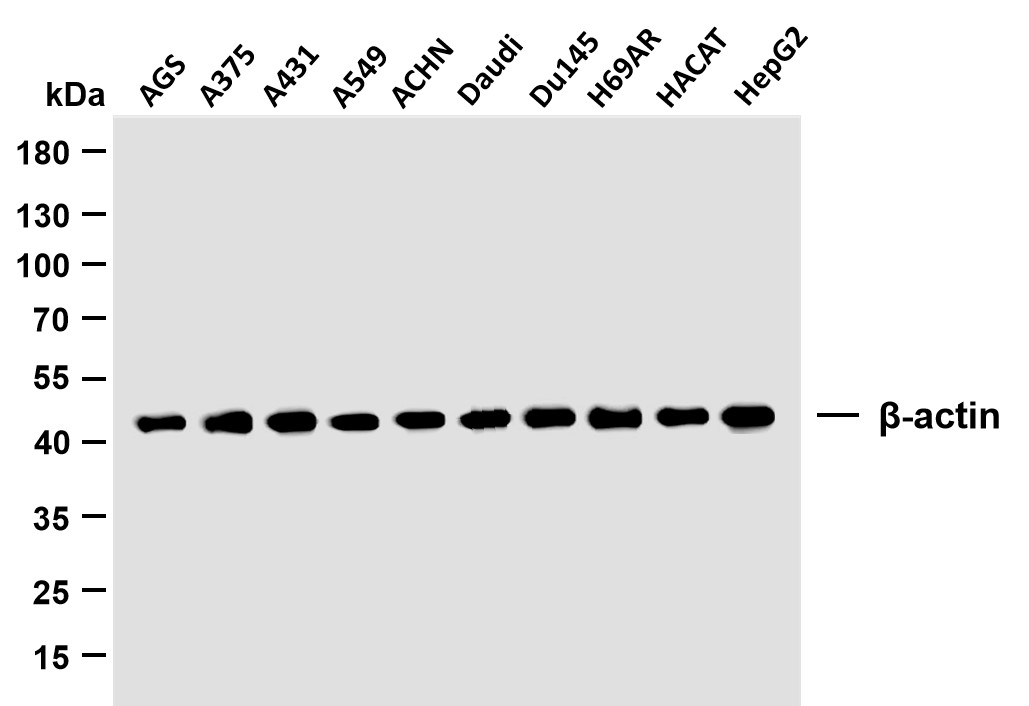
β-actin (PTR2364) Mouse mAb
YM3028
预览→
Primary Antibodies
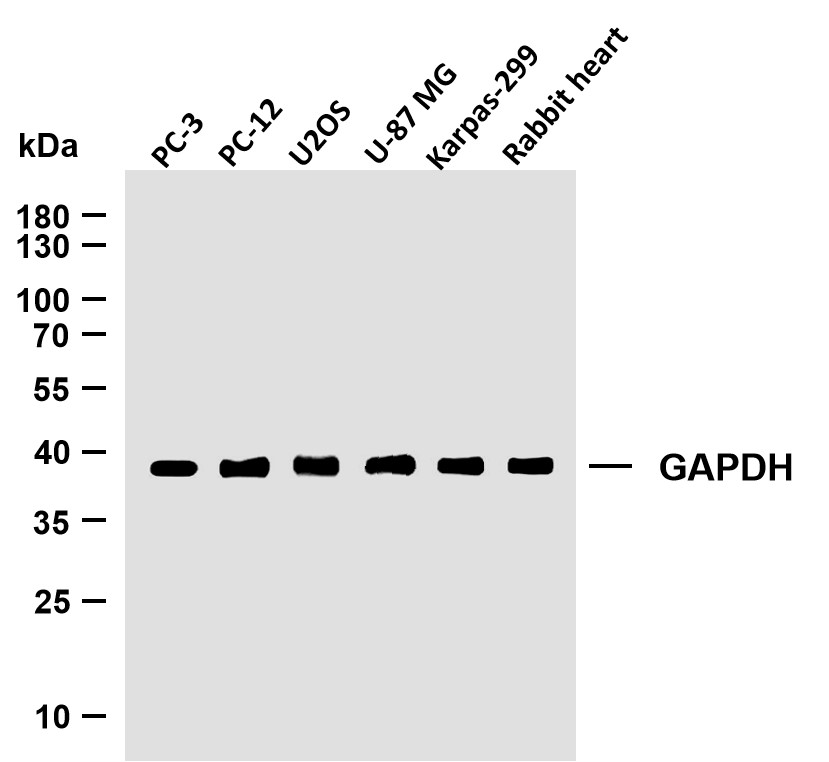
GAPDH (PTR2304) Mouse mAb
YM3029
预览→
抗原&靶点信息
免疫原:
The specific immunogen used to produce this antibody is proprietary information.
展开内容
特异性:
Endogenous
展开内容
基因名称:
NDUFB8
展开内容
蛋白名称:
NADH dehydrogenase [ubiquinone] 1 beta subcomplex subunit 8, mitochondrial (Complex I-ASHI) (CI-ASHI) (NADH-ubiquinone oxidoreductase ASHI subunit)
展开内容
背景:
function:Accessory subunit of the mitochondrial membrane respiratory chain NADH dehydrogenase (Complex I) , that is believed to be not involved in catalysis. Complex I functions in the transfer of electrons from NADH to the respiratory chain. The immediate electron acceptor for the enzyme is believed to be ubiquinone. ,similarity:Belongs to the complex I NDUFB8 subunit family. ,subunit:Complex I is composed of 45 different subunits. ,
展开内容
功能:
Function:Accessory subunit of the mitochondrial membrane respiratory chain NADH dehydrogenase (Complex I) , that is believed to be not involved in catalysis. Complex I functions in the transfer of electrons from NADH to the respiratory chain. The immediate electron acceptor for the enzyme is believed to be ubiquinone. ,similarity:Belongs to the complex I NDUFB8 subunit family. ,subunit:Complex I is composed of 45 different subunits. ,
展开内容
细胞定位:
Mitochondrion inner membrane
展开内容
组织表达:
研究领域:
>>Oxidative phosphorylation ;
>>Metabolic pathways ;
>>Thermogenesis ;
>>Retrograde endocannabinoid signaling ;
>>Non-alcoholic fatty liver disease ;
>>Alzheimer disease ;
>>Parkinson disease ;
>>Amyotrophic lateral sclerosis ;
>>Huntington disease ;
>>Prion disease ;
>>Pathways of neurodegeneration - multiple diseases ;
>>Chemical carcinogenesis - reactive oxygen species ;
>>Diabetic cardiomyopathy
>>Metabolic pathways ;
>>Thermogenesis ;
>>Retrograde endocannabinoid signaling ;
>>Non-alcoholic fatty liver disease ;
>>Alzheimer disease ;
>>Parkinson disease ;
>>Amyotrophic lateral sclerosis ;
>>Huntington disease ;
>>Prion disease ;
>>Pathways of neurodegeneration - multiple diseases ;
>>Chemical carcinogenesis - reactive oxygen species ;
>>Diabetic cardiomyopathy
展开内容
信号通路
Human Diseases >> Neurodegenerative disease >> Alzheimer disease
Human Diseases >> Neurodegenerative disease >> Parkinson disease
Human Diseases >> Neurodegenerative disease >> Amyotrophic lateral sclerosis
Human Diseases >> Neurodegenerative disease >> Huntington disease
Human Diseases >> Neurodegenerative disease >> Prion disease
Human Diseases >> Neurodegenerative disease >> Pathways of neurodegeneration - multiple diseases
文献引用({{totalcount}})
货号: YM8160
规格
价格
货期
数量
200μL
¥3,580.00
现货
0
100μL
¥1,960.00
现货
0
40μL
¥960.00
现货
0
加入购物车
已收藏
收藏
Recently Viewed Products
Clear all


×

Toggle night Mode
{{pinfoXq.title || ''}}
Catalog: {{pinfoXq.catalog || ''}}
Filter:
All
{{item.name}}
{{pinfo.title}}
-{{pinfo.catalog}}
主要信息
Target
{{pinfo.target}}
Reactivity
{{pinfo.react}}
Applications
{{pinfo.applicat}}
Conjugate/Modification
{{pinfo.coupling}}/{{pinfo.modific}}
MW (kDa)
{{pinfo.mwcalc}}
Host Species
{{pinfo.hostspec}}
Isotype
{{pinfo.isotype}}
产品 {{index}}/{{pcount}}
上一个产品
下一个产品
{{pvTitle}}
滚轮缩放图片
{{pvDescr}}